


Best Blue Light Glasses for Work: 2026 Comparison

Table of Contents
- What to Look for in Blue Light Glasses for Work
- Comparison Table: Blue Light Glasses for Work
- Best Computer Glasses for Screen-Heavy Workdays
- Do Blue Light Glasses Work? What the Evidence Says
- Prescription Blue Light Glasses for Work
- Blue Light Glasses with Anti-Reflective Coating
- Product Reviews: Cutler and Gross Blue Light Opticals
- Frequently Asked Questions
Last Updated: October 14, 2026
What to Look for in Blue Light Glasses for Work
The best blue light glasses for work balance three things: how much blue light the lens actually filters, how the frame feels after eight hours, and whether the lens distorts color on your screen. Get those right and you have a pair you will reach for every morning. Get them wrong and you have an expensive accessory sitting in a drawer.

At The Optical Shop of Manhasset, we fit screen-heavy professionals daily, and the same questions come up: will these help, will they look right, and will my prescription work in them? Below, we break down lens tints, frame fit, and our own in-house picks so you can choose with confidence.
Lens Tint and Filtering Effectiveness
Lens tint determines how much blue light reaches your eye and how much color shift you notice. Clear lenses with a blue-light coating filter a modest amount and stay invisible on video calls. Yellow and amber tints filter more but warm everything you see. Red tints filter the most and are usually reserved for evening use, because they distort color badly during the workday.
Blue-light filtering works by reflecting or absorbing specific wavelengths in the 380-500 nanometer range. For work, a light amber or near-clear tint is the practical middle ground: enough filtering to take the edge off screen glare, not so much that your spreadsheets look orange.
Frame Fit and All-Day Comfort
Weight and fit matter more than most buyers expect. A frame that pinches at the temples or slides down your nose will not survive a full workday, no matter how good the lens is.
Look for lightweight acetate or titanium, adjustable nose pads, and a bridge width that matches your face. If you have a smaller face, a narrower frame stops the constant push-up habit. Spring hinges help if you take glasses on and off all day.
Comparison Table: Blue Light Glasses for Work
| Frame | Price | Shape | Best For | Lens |
|---|---|---|---|---|
| Cutler and Gross 1381 Square Opticals | $495.00 | Square with browline | All-day office wear | Blue light-blocking |
| Cutler and Gross 1378 Round Opticals | $535.00 | Round | Statement style, larger faces | Blue light filter |
| Cutler and Gross 1378 Round Opticals (Small) | $535.00 | Round, smaller fit | Narrower faces | Blue light filter |
Best Computer Glasses for Screen-Heavy Workdays
For a screen-heavy workday, the best computer glasses are a lightweight frame with a near-clear blue-light lens and an anti-reflective coating on both sides. That combination cuts glare from overhead lights and monitors without shifting the colors you need to judge accurately.

Our top pick is the Cutler and Gross 1381 Blue Light Filter Square Opticals at $495.00. The swooping browline and polished pins give it presence without being loud, and it is handcrafted and slotted with blue light-blocking lenses. For most professionals staring at a monitor from nine to five, this is the frame we hand over first.
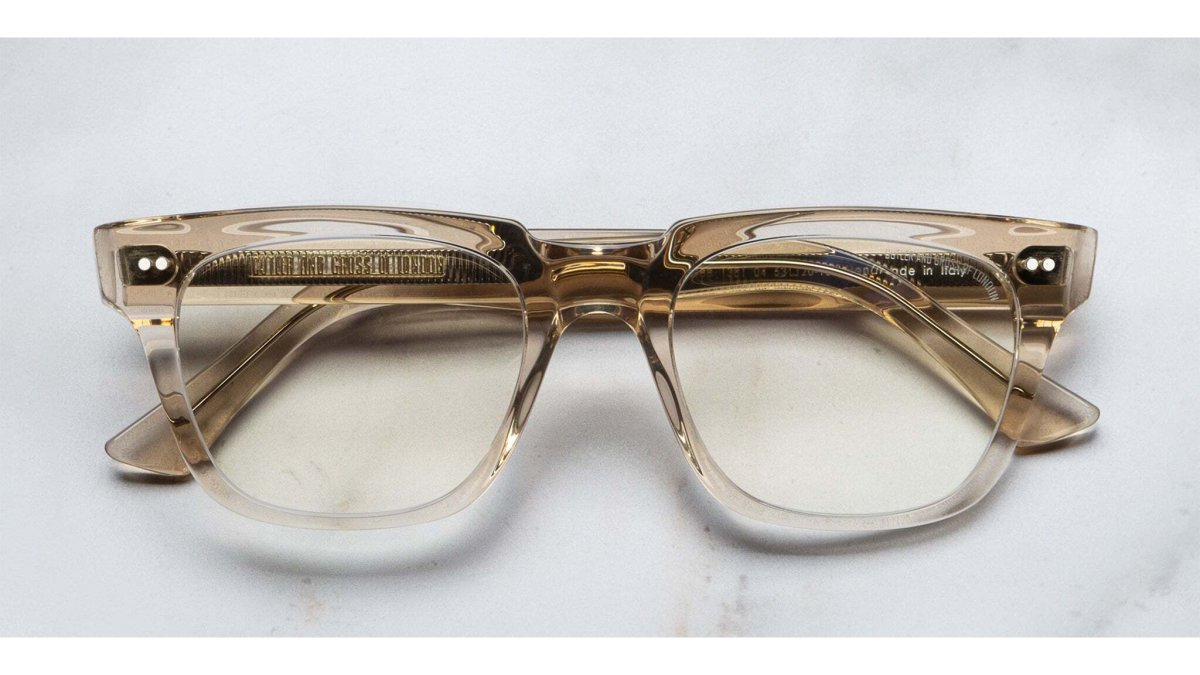
If you want a rounder silhouette, the 1378 delivers the same lens technology in a refined round shape. It costs $535.00, and the smaller version fits narrower faces at the same price.

Do Blue Light Glasses Work? What the Evidence Says
The honest answer: blue light glasses may reduce some screen-related discomfort, but the evidence that they prevent digital eye strain is mixed. Digital eye strain is driven mostly by how you use your eyes, not by blue light alone. Long stretches without blinking, close working distance, and glare all contribute.
The American Optometric Association's guidance on computer vision syndrome points to screen habits, lighting, and posture as the primary levers. Blue-light filtering is one tool among several, not a cure.
What the research does support more firmly is the link between blue light and sleep timing. Blue light suppresses melatonin, the hormone that helps you fall asleep (Blue Light: What It Is and How It Affects Sleep). The National Sleep Foundation's overview of light and sleep explains how evening exposure can shift your circadian rhythm. That is why many people wear blue-light glasses at night rather than all day.
Prescription Blue Light Glasses for Work
Prescription blue light glasses combine your vision correction with a blue-light filter, so you are not layering a non-prescription pair over contacts. For anyone with astigmatism or a strong prescription, this matters: the lens has to be measured and centered correctly or you get that blurry, distorted edge feeling.
Prescription blue light glasses are the right choice if you already wear correction for distance or reading. Your optician measures pupillary distance and fitting height, then the lens is cut to your frame. A near-clear blue-light coating can be added to single-vision, progressive, or occupational lenses.
This is where an on-site lab earns its keep. At The Optical Shop of Manhasset, we cut and finish prescription lenses in our own laboratory, which means complex prescriptions and occupational designs get the precision they need without a long wait.
Blue Light Glasses with Anti-Reflective Coating
Blue light glasses with anti-reflective coating cut the reflections that bounce off the front and back of your lens. Those reflections are a big part of why screens feel harsh: they create ghosting and halos around text and lights. An anti-reflective coating reduces that glare and lets more of the light you want reach your eye.
For work, we recommend pairing blue-light filtering with anti-reflective coating rather than choosing one or the other. The combination handles both the light coming from your screen and the light bouncing off it. If you take a lot of video calls, the coating also reduces the reflection of your own screen in the camera.
Cutler And Gross 1381 Blue Light Filter Square Opticals →
What Anti-Reflective Coating Actually Does
An anti-reflective coating is a thin, multi-layer film applied to the lens surface. Each layer is tuned to cancel reflections at a specific wavelength, which is why quality coatings use several layers rather than one. A good coating reduces reflections across the visible spectrum, not just at one color. That is why a cheap single-layer coating can leave a noticeable purple or green sheen, while a multi-layer coating looks nearly invisible.
Coating Quality and Durability
Coatings vary widely in quality. A budget coating can haze, peel, or scratch within months. A quality coating is applied in a controlled environment, cured properly, and often topped with a hydrophobic and oleophobic layer that repels water and oil. When you buy from a shop that finishes lenses on site, you can ask exactly which coating is being applied, how many layers it uses, and how it is warranted. If the coating is not warranted against peeling or hazing, that tells you something about the expected lifespan.
Prescription and Occupational Compatibility
Anti-reflective coating is compatible with single-vision, progressive, and occupational lens designs. For prescription wearers, the coating is applied after the lens is cut and edged, so it does not interfere with the optical center or the fitting height. If you wear occupational lenses, designed for a specific working distance, such as a monitor at arm's length, the coating is applied the same way. The one caveat is that some high-index lens materials require a specific coating formulation; your optician should confirm compatibility before ordering.
How to Evaluate Coating Performance
You can test a coating before you buy. Hold the lens under an overhead light and look for the color and intensity of the reflection. A faint, even reflection across the lens suggests a multi-layer coating. A strong, colored reflection suggests a thinner or single-layer coating. Then look through the lens at a bright screen: text should look crisp, without a halo or ghost image. If you see a double image, the coating is not doing its job.
Product Reviews: Cutler and Gross Blue Light Opticals
Cutler and Gross frames are handcrafted, and the blue-light versions slot filtering lenses into the same construction. These are the three we fit most often for desk work.
Cutler and Gross 1381 Blue Light Filter Square Opticals
At $495.00, the 1381 is our most-recommended work frame. The square shape with a swooping browline reads professional without being boring, and the polished pins on the lugs add detail up close. It is handcrafted and fitted with blue light-blocking lenses, so it goes from your desk to a client meeting without looking like a gadget. The one drawback: the browline is a statement, so if you prefer an invisible frame, this is not it.
Cutler and Gross 1381 Blue Light Filter Square Opticals
Cutler and Gross 1378 Blue Light Filter Round Opticals
The 1378 is a contemporary take on the brand's bestselling 1338, handcrafted in Italy to a refined round silhouette. Fretboard core wire and Big Eye pins give it the Cutler and Gross character, and it comes with blue-light lens technology. At $535.00, it suits larger faces and anyone who wants a rounder, more classic look.
Cutler and Gross 1378 Blue Light Filter Round Opticals
The same frame comes in a smaller version at $535.00, reimagined in smaller proportions for narrower faces. If standard frames slide down or overwhelm your features, this is the one to try. The fretboard core wire and Big Eye pins carry over, so you get the same design in a fit that stays put.
Cutler and Gross 1378 Blue Light Filter Round Opticals (Small)
Screen fatigue builds slowly, and by mid-afternoon it is hard to ignore. The right pair of blue light glasses for work, fitted properly and matched to your prescription, makes the day easier on your eyes.
Frequently Asked Questions
Do blue light glasses actually work for digital eye strain?
Research on blue light glasses and digital eye strain is mixed. Some studies show a small improvement in symptoms like eye fatigue, while others find no significant difference. The American Academy of Ophthalmology notes that digital eye strain is often caused by reduced blinking and poor ergonomics rather than blue light alone. Blue light glasses may help some people, but they work best alongside screen breaks and proper lighting.
Can prescription glasses include blue light filtering lenses?
Yes. Prescription blue light glasses combine your vision correction with a blue-light filtering coating or lens material. This is helpful if you already wear glasses for nearsightedness, farsightedness, or astigmatism and want to reduce screen glare at work. An optician can confirm whether your prescription is compatible with blue-light filtering options and help you choose the right lens tint.
Should I wear blue light glasses all day at work?
You can wear blue light glasses throughout the workday, but they are most useful during extended screen sessions. If you work in a role that mixes computer use with in-person tasks, you may prefer clear lenses for daytime wear and reserve stronger tints for evening screen time. The key is matching the lens tint to your lighting conditions and how long you spend looking at screens.
What should I look for in blue light glasses for computer work?
Focus on lens tint, frame fit, and anti-reflective coating. Clear or lightly tinted lenses work well for daytime office use, while amber or yellow lenses filter more blue light but can shift color perception. Anti-reflective coating reduces screen glare and reflections. Frame weight matters too: lightweight frames with adjustable nose pads stay comfortable through an eight-hour workday. Try frames in person to check fit and comfort.
Leave a comment