


How to Clean Luxury Eyewear Frames: A Step-by-Step Guide

Table of Contents
- Why Luxury Eyewear Frames Need a Different Cleaning Routine
- What to Use to Clean Glasses Frames (and What to Avoid)
- Step-by-Step: How to Clean Luxury Eyewear Frames Safely
- How to Clean Acetate Eyeglass Frames
- How to Clean Metal Eyeglass Frames
- How Often to Clean Eyeglasses and a Simple Maintenance Schedule
- Troubleshooting Haze, Loose Screws, and Frame Discoloration
- Conclusion
- Frequently Asked Questions
Last Updated: October 18, 2026
Why Luxury Eyewear Frames Need a Different Cleaning Routine
Learning how to clean luxury eyewear frames properly matters because the materials in high-end frames are far less forgiving than the plastic and base-metal builds sold at big-box stores. Acetate, titanium, and plated finishes scratch, cloud, or discolor when treated like ordinary glasses.
The results of an incorrect cleaning routine can include hazy lenses, dulled acetate, and gold plating worn thin at the temples.
The core difference comes down to finish. A designer frame carries polished surfaces, delicate hardware, and often hand-finished details that react badly to harsh chemicals. The American Optometric Association's guidance on eyewear care points to the same principle: gentle products and soft cloths protect both lenses and frames.
Most guides treat all glasses the same. That is the mistake. A $708 Thom Browne acetate round frame and a drugstore pair do not need the same handling.

Below, we walk through exactly what to use, the safe step-by-step method, and how to care for each frame material so your eyewear keeps its finish for years.
What to Use to Clean Glasses Frames (and What to Avoid)
The safest tools for cleaning glasses frames are lukewarm water, a mild lotion-free soap, and a clean microfiber cloth. Skip anything with ammonia, alcohol, or abrasives.
Here is the short list we recommend:
- Lukewarm tap water to rinse away dust and debris
- Mild dish soap that is lotion-free and fragrance-free
- A pH-neutral cleanser made for eyewear
- A clean microfiber cloth or lint-free towel for drying
- Pre-moistened eyeglass wipes for quick touch-ups on the go
Now the items that cause damage:
- Household glass cleaner with ammonia, which strips coatings and dulls acetate
- Paper towels and tissues, which leave scratches and lint
- Hot water, which can warp acetate frames
- Harsh chemicals like bleach or acetone, which ruin frame finish
Step-by-Step: How to Clean Luxury Eyewear Frames Safely
Cleaning luxury eyewear frames safely takes about two minutes and three steps: rinse, clean, and dry. The order matters as much as the products.
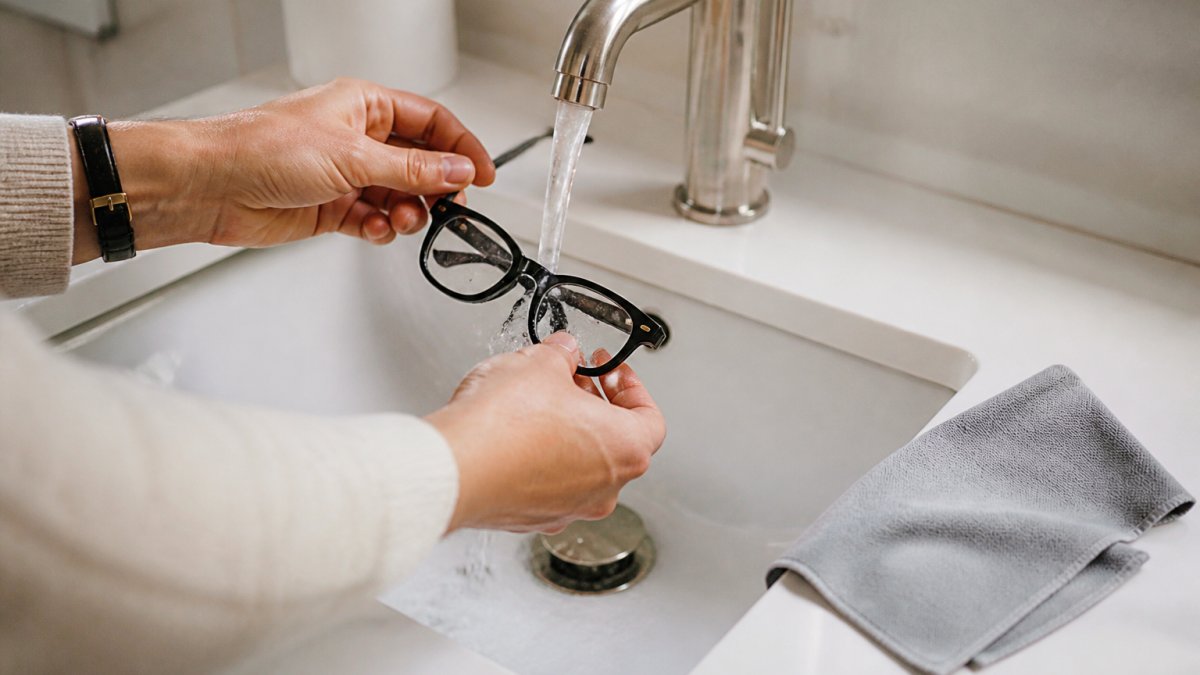
Step 1: Rinse Lenses and Frame Fronts
Start by holding the frame under lukewarm water. Rinse the lens surfaces and the frame front to float away dust and debris.
This step protects the lens coatings. Any grit left on the surface will grind into the anti-reflective coating during wiping.
Step 2: Clean Temples, Nose Pads, and Hinges
Apply a drop of mild soap to your fingertips. Gently clean the temples, nose pads, and hinges, where oil and fingerprints collect fastest.
Work the soap around the frame front too, then rinse everything thoroughly. Soap residue left behind creates the haze people blame on their lenses.
Step 3: Dry With a Clean Microfiber Cloth
Shake off excess water, then dry with a clean microfiber cloth. Use a fresh cloth, not one that has been rolling around in a bag picking up grit.
Wipe the lenses gently in one direction. Then dry the frame and hinges so water spots do not form.
How to Clean Acetate Eyeglass Frames
Acetate is not ordinary plastic. It is a plant-based material made from cotton fibers and wood pulp, and it is porous. That porosity is why acetate frames hold rich color and a deep gloss, but it is also why they absorb oils, sunscreen, and alcohol-based products that can cloud the surface or leach color over time. Cleaning acetate well means respecting that porosity.
Start with lukewarm water, never hot. Acetate softens at relatively low temperatures, and hot water can warp the frame front or distort the fit. Rinse the frame to float away dust, then apply a drop of lotion-free, fragrance-free soap to your fingertips and work it gently over the frame front and temples. Avoid scrubbing the surface with a cloth while it is soapy; use your fingers to lift oil, then rinse thoroughly. Dry with a clean microfiber cloth, and pay attention to the hinges and any recessed areas where water can sit.
A few acetate-specific habits make a real difference:
- Skip alcohol-based wipes and hand sanitizer. Alcohol is a solvent for acetate and can dull the polished finish or leave white streaks. If you use hand sanitizer, let it dry completely before touching your frames.
- Keep frames out of hot cars and away from hair dryers. Heat softens acetate and can cause the frame to lose its shape permanently.
- Store in a hard case, not loose in a bag. Acetate scratches more easily than metal, and grit in a bag acts like sandpaper on the finish.
- Address discoloration early. Sunscreen and sweat can leave a yellow or cloudy film on acetate. A gentle wash with mild soap usually lifts it; if the discoloration has penetrated the surface, a professional polish is the safe next step.
Between washes, a quick wipe with a dry microfiber cloth keeps fingerprints and smudges from settling into the surface. For a hand-finished frame like the Thom Browne acetate round eyeglasses, the surface is the design, gentle care protects the look you paid for.
Thom Browne Acetate Round Eyeglasses →
How to Clean Metal Eyeglass Frames
Metal frames are more durable than acetate, but they are not indestructible. The weak points are the hinges, the screws, and any plated finish. Plated metals, including gold-plated titanium, can wear thin at the temples and nose pads, and once the plating is compromised, the base metal underneath can corrode or discolor. Cleaning metal frames well means drying every crevice and avoiding abrasives that accelerate plating wear.
Use the same lukewarm water and mild, lotion-free soap you would use on acetate. Rinse the frame, work soapy water around the frame front, temples, and hinges with your fingertips, then rinse thoroughly. The critical step is drying: use a clean microfiber cloth to dry the frame, then use a dry corner of the cloth or a cotton swab to wick moisture out of the hinges and around the screws. Water left sitting in a hinge is the most common cause of corrosion and stiffness.
A few metal-specific habits pay off:
- Dry hinges and screws completely after every wash. Moisture trapped in the hinge can cause rust and loosen the screw over time.
- Use a soft cloth, never a scouring pad or abrasive cleaner. Abrasives wear away plating and leave micro-scratches that trap dirt.
- Check screws monthly and tighten gently with a small screwdriver. Over-tightening can strip the hinge; stop if the screw feels loose or cross-threaded.
- Rinse after sweat and sunscreen exposure. Salt and sweat are corrosive to plated finishes. A quick rinse and dry after a workout or a day in the sun extends the life of the finish.
Titanium resists corrosion well, which is one reason it suits sensitive skin, but even titanium frames benefit from thorough drying. The 18k gold-plated titanium on a frame like the Thom Browne acetate and titanium rectangular eyeglasses looks best when you avoid abrasive cloths and harsh chemicals and keep the hinges dry.

If you notice pitting, persistent discoloration, or a hinge that will not stay tight, bring the frame in for a professional check. Early intervention is almost always cheaper than refinishing or replacing a frame.
How Often to Clean Eyeglasses and a Simple Maintenance Schedule
Cleaning eyeglasses daily is the right baseline, with a deeper clean once a week. Frames touch your face all day, so oil, sweat, and makeup build up fast.
A suggested maintenance schedule:
| Task | Frequency | Time Needed |
|---|---|---|
| Quick microfiber wipe | Daily | 30 seconds |
| Full soap-and-water wash | Weekly | 2 minutes |
| Deep clean of hinges and nose pads | Monthly | 5 minutes |
| Screw and fit check | Monthly | 2 minutes |
If you wear glasses every day, add a rinse on heavy-sweat days. Sunscreen, makeup, and sweat all speed up buildup on the frame front and nose pads.
Troubleshooting Haze, Loose Screws, and Frame Discoloration
Persistent haze usually means soap residue or a scratched coating, not dirt. Rinse thoroughly after every wash and dry with a clean cloth to rule out residue first.
If haze stays after a proper wash, the lens coating may be worn. That is a job for a professional, not a stronger cleaner.
Loose screws are common and easy to manage. Tighten them gently with a small screwdriver, and stop if the hinge feels stripped.
Frame discoloration often comes from sunscreen, chlorine, or saltwater left on the frame. Rinse frames with fresh water after swimming or heavy sunscreen use, and dry them fully.
Conclusion
Luxury frames reward a little care with years of good looks. Rinse with lukewarm water, use mild soap, dry with a clean microfiber cloth, and match the routine to the material.
When a frame needs more than a wash, our on-site optical laboratory and repair services can help. We offer precision-crafted lenses, expert eyeglasses repair, and a curated collection of independent eyewear from renowned global designers, including titanium and acetate pieces from Akoni.

Get started with The Optical Shop of Manhasset and keep your eyewear looking its best.
Frequently Asked Questions
What do professionals use to clean eyeglasses?
Optical professionals typically use a pH-neutral lens cleaner paired with a clean microfiber cloth. The routine starts with a lukewarm water rinse to lift dust and debris, then a few sprays of lens cleaner on the lenses and frame front, followed by gentle wiping with a lint-free cloth. For luxury eyewear frames, many opticians avoid paper towels, tissues, and household glass cleaner because they can leave scratches or dull the frame finish. A specialized lens cleaner and a fresh microfiber cloth cover most everyday cleaning needs.
Can I use Dawn dish soap to clean my eyeglasses?
A small drop of mild dish soap works well for many eyeglasses, provided it is lotion-free and fragrance-free. The key is dilution: mix one drop into a bowl of lukewarm water and use the sudsy water rather than applying soap directly to the frame. Rinse thoroughly afterward so no soap residue is left in the hinges or around the lenses. Avoid dish soaps with added moisturizers or citrus oils, which can leave a film on lens coatings and acetate frames.
Can I use alcohol wipes on glasses frames?
Alcohol wipes are best avoided on luxury eyewear frames. Isopropyl alcohol can dry out acetate frames over time, causing them to become brittle or discolored, and it can degrade some lens coatings and anti-reflective layers. For metal frames, alcohol may also affect plated finishes. If you need to sanitize, use a lens-safe cleaner or a slightly damp microfiber cloth instead, and reserve alcohol-based products for occasional use on the lenses only if the manufacturer confirms they are safe.
How often should I clean eyeglass frames?
Most people should clean their eyeglasses daily with a quick rinse and microfiber wipe, and do a deeper clean of the frame front, temples, nose pads, and hinges once a week. If you wear your glasses all day, work on screens, or apply makeup and sunscreen regularly, a weekly deep clean is the minimum. Frames exposed to sweat, saltwater, or chlorine should be rinsed with lukewarm water immediately after exposure, then dried with a clean microfiber cloth to prevent buildup and finish damage.
Leave a comment