


How to Stop Glasses Sliding Down Your Nose

Table of Contents
- Why Your Glasses Keep Sliding Down (and How to Diagnose It)
- How to Adjust Nose Pads on Glasses for a Secure Fit
- How to Tighten Glasses Arms and Temples
- Glasses Slipping Without Nose Pads: Solutions for Plastic Frames
- Best Glasses for Low Nose Bridge and Slipping Prevention
- Temporary Fixes vs. Durable Solutions: What Actually Works
- Care and Maintenance of Grip Accessories and Frames
- When to See an Optician for Professional Adjustment
- Frequently Asked Questions
Last Updated: October 12, 2026
Why Your Glasses Keep Sliding Down (and How to Diagnose It)
Glasses sliding down your nose is almost always a fit problem, not a flaw in the frames themselves. The fix depends on why they slip: the frame is too wide, the bridge is too narrow for your nose, the temples are loose, or the frame is simply too heavy for daily wear. (Source: a 2026 survey on eyewear consumer habits)
Most people blame their nose shape. That is usually wrong.
Frame Fit: Width, Bridge, and Temple Length
Three numbers decide whether a frame stays put.
- Frame width: the total front measurement. Too wide, and the frame rocks side to side.
- Bridge width: the gap that sits on your nose. Too wide, and there is nothing to grip.
- Temple length: the arms reaching your ears. Too short, and the frame pulls forward.
When any one of these is off, gravity wins. Check all three before you adjust anything.
When Slipping Signals a Prescription or Fit Problem
Constant sliding can point to something bigger than a loose screw. If your glasses sit too low, you may tilt your head to see clearly. That posture change pushes the frame down again.
A few signs it is not just fit:
- You push your glasses up dozens of times a day
- Your eyes feel tired by mid-afternoon
- The frame leaves red marks on your nose
If that sounds familiar, the frame may not match your prescription. A proper fitting and a prescription check solve what no sticker can.
How to Adjust Nose Pads on Glasses for a Secure Fit
Adjusting nose pads is the fastest fix for metal frames. Work slowly, use gentle pressure, and always pad the pliers with cloth so you do not scratch the finish.
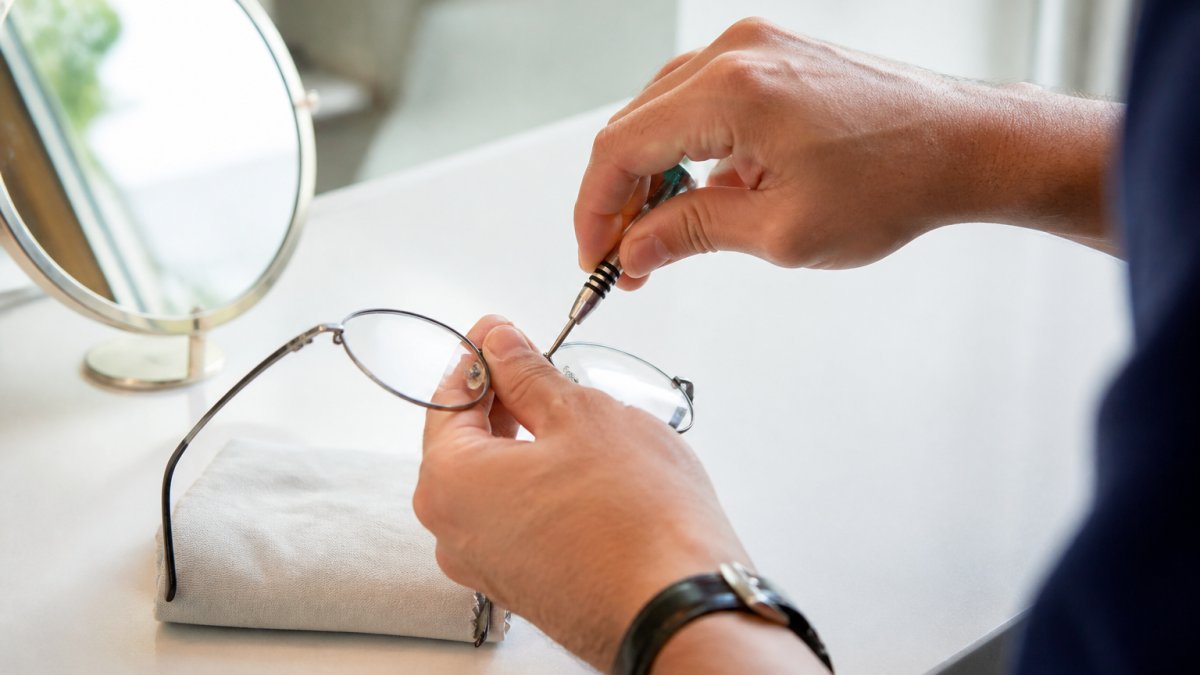
Here is the safe sequence:
- Clean the pads and your nose first. Skin oils reduce grip.
- Grip each pad arm with padded pliers, close to the pad.
- Squeeze the pads slightly closer together to increase contact.
- Bend each pad so it sits flat against the side of your nose.
- Try the glasses on. Repeat in tiny steps, never one big bend.
Tiny adjustments beat big ones. Metal fatigues and can snap if you force it.
Metal Frames with Adjustable Nose Pads
Metal frames give you the most control because the pad arms move. Aim for full contact along the side of the nose, not just the tip.
Two rules matter here:
- The pads should touch evenly, with no gap at the top.
- Pressure should feel light. Digging into the nose means you over-tightened.
If the pads keep drifting back, the pad arms may be too soft. That is a job for an optician.
Silicone Nose Pad Grips and Stickers
Silicone nose pad grips and stickers add friction without changing the frame. They are the go-to fix when you cannot adjust the pads themselves.
Adhesive pads stick to the existing nose pads or the bridge. Silicone grips slide over the pad arms.
A common mistake is buying thick pads. Thick pads lift the frame too high and change how you see through the lenses.
How to Tighten Glasses Arms and Temples
Loose temples are the second most common cause of glasses sliding down. A tiny turn of a screw often fixes what feels like a major problem.
You need a small screwdriver, the kind sold in any optical repair kit.
- Find the hinge screws at the front corners of the frame.
- Turn each screw clockwise, gently, until it stops.
- Do not over-tighten. Stripped threads ruin the hinge.
- Check the temple bend behind your ear. It should curve down, not stick out.
- If the arms splay outward, they need reshaping, not tightening.
If a screw keeps loosening, a drop of clear nail polish on the threads adds friction. It is a temporary fix, but it works.
Glasses Slipping Without Nose Pads: Solutions for Plastic Frames
Plastic frames have no nose pads, so you cannot adjust them the same way. The bridge is molded into the frame, and only heat can reshape it.

Never bend plastic frames cold. They crack.
Your options for plastic frames:
- Heat adjustment by a professional. An optician warms the bridge and reshapes it to your nose.
- Adhesive silicone pads. These add grip to a smooth bridge.
- A different frame. If the bridge is far too wide, no pad will fully fix it. (Source: the American Optometric Association's guidelines)
This is where fit beats fashion. A frame that matches your bridge width needs almost no help staying up.
Best Glasses for Low Nose Bridge and Slipping Prevention
A low nose bridge gives the frame less surface area to rest on, so the frame has to do more of the work through geometry rather than gravity. Four measurements decide whether a frame will stay put on a low bridge:
- Bridge width. This is the gap between the lenses, measured in millimeters and printed on the inside of the temple. A bridge that is 2-4 mm narrower than your nose bridge creates contact; a bridge that is wider leaves nothing to grip.
- Bridge height and shape. A keyhole bridge or a high-mounted bridge sits higher on the nose and contacts the sides rather than the flat top. A saddle bridge spreads contact across a wider area, which helps some nose shapes and hurts others.
- Pantoscopic tilt. This is the downward angle of the lens plane, usually 8-12 degrees. Too little tilt and the frame sits flat and slides; too much and the bottom edge digs into your cheeks.
Matching Frame Style to Nose Shape
| Nose characteristic | What to look for | What to avoid |
|---|---|---|
| Low bridge, wide base | Keyhole bridge, adjustable pads, 16-18 mm bridge width | Saddle bridges, wide bridges over 20 mm |
| Narrow bridge, high root | Saddle bridge or low-profile pads, 14-16 mm bridge | Keyhole bridges that sit too high |
| Flat bridge, little projection | Frames with adjustable pad arms and a curved pad angle | Molded plastic bridges with no pad contact |
| Oily or perspiration-prone skin | Matte finishes, silicone grips, lightweight titanium | Polished acetate, heavy frames over 30 g |
Frame Weight and Material
Weight is the quiet variable. A frame over roughly 30 grams pulls forward every time you look down. Titanium, TR-90, and thin stainless steel keep the total weight low without sacrificing stability. Acetate frames can work well, but they need a bridge that matches your nose because you cannot fine-tune them the way you can metal pad arms.
A Quick Self-Check Before You Buy
- Put the frame on and look down at your shoes. If the frame slides forward more than a few millimeters, the bridge is too wide or the temples are too loose.
- Smile and wrinkle your nose. If the frame lifts off your bridge, the pads are not making full contact.
- Turn your head side to side. If the frame rocks, the face-form curve or temple width is off.
If a frame fails two or more of these checks, no sticker or pad will fully fix it. The frame itself is the problem, and the right bridge width is the durable solution.
Temporary Fixes vs. Durable Solutions: What Actually Works
Temporary fixes stop the sliding today. Durable solutions stop it for good. The difference is not just how long each lasts, it is what each one changes about the frame.
What Each Fix Actually Does
- Silicone stickers and adhesive pads add friction between the frame and your skin. They do not change the frame's geometry, so they work only when the frame is close to fitting already. Expect a few weeks of grip before edges lift, sooner if you wear sunscreen or perspire heavily.
- Nose pad adjustment changes the angle and spacing of the pad arms so the pads make full contact with the sides of your nose. This is a real fit change, not a surface fix, and it can last months if the metal does not fatigue.
- Screw tightening restores tension at the hinge so the temples grip behind your ears. It is fast and reversible, but it does nothing for a bridge that is too wide.
How Long Each Fix Lasts
| Fix | Time to apply | Realistic lifespan | Changes frame geometry? |
|---|---|---|---|
| Silicone stickers | Minutes | Weeks | No |
| Nose pad adjustment | Minutes | Months | Yes, pad angle only |
| Screw tightening | Minutes | Months | No |
| Professional reshaping | Same day | Long term | Yes |
| New frame fit to your face | One visit | Years | Yes, at purchase |
The Trade-Off Nobody Mentions
Stickers and grips are bridges, not solutions. If you replace them every few weeks, the frame itself is the problem, and you are spending money on a workaround instead of a fix.
There is also a comfort trade-off. Thick silicone pads lift the frame higher on your nose, which changes where your eyes sit behind the lenses. That can make vision feel off even when the frame stays put.
A Simple Decision Rule
- If the frame fits well and slips only during exercise or in heat, a temporary grip is fine.
- If the frame slips every day, start with a pad adjustment or screw tightening.
- If the frame is plastic, has no pads, or the bridge is clearly too wide, skip the stickers and see an optician.
Care and Maintenance of Grip Accessories and Frames
Grip accessories last longer when you clean them. Skin oils, sunscreen, and perspiration break down adhesive and silicone over time.
A simple routine keeps everything working:
- Rinse pads and grips with warm water and mild soap weekly
- Dry with a soft cloth, never a rough towel
- Replace adhesive pads when edges start to lift
One insider note: sunscreen is the quiet killer of adhesive pads. If you wear it daily, expect to replace pads more often.
When to See an Optician for Professional Adjustment
See an optician when the frame needs reshaping, the bridge does not match your nose, or slipping comes with tired eyes and headaches. Those are signs a professional should handle.
We keep a full optical laboratory on site, ensuring efficient turnaround times for prescription lenses and expert eyewear repairs.
Some problems are not fit problems at all. If your vision feels off or the frame sits low no matter what, a comprehensive eye exam can reveal whether your prescription needs updating. Frames from designers like Jacques Marie Mage and Akoni are crafted to hold their shape, but they still need to match your face.

Do not force a frame that fights your anatomy. The right fit ends the sliding for good.
Frequently Asked Questions
How do I adjust nose pads on plastic glasses?
Plastic frames typically have molded nose pads that cannot be bent. Instead, try applying silicone nose-pad stickers or adhesive grips to the bridge area. If the frame is too wide, an optician can heat and reshape the temples for a snugger fit. For plastic frames with separate metal nose pads, use a small screwdriver to gently squeeze the pads closer together, but avoid over-bending to prevent breakage.
Can an optician adjust glasses that keep slipping?
Yes. An optician can assess frame alignment, tighten hinges and screws, and adjust nose pads or temples to match your face shape. Professional adjustment is especially useful for complex prescriptions or high-end frames where improper bending can cause damage. If slipping persists after adjustment, the optician may recommend a different frame size or style better suited to your nose bridge and face width.
Are my glasses slipping because the frames are too wide?
Frame width is a common cause. If the distance between the temples is wider than your head, the glasses will slide forward. Check by looking at whether the arms press outward against your temples or leave a gap. A frame that is too wide can often be adjusted by an optician who gently bends the temples inward. If the frame is significantly oversized, a smaller size may be the better solution.
How can I stop glasses from sliding down without nose pads?
For frames without nose pads, focus on temple fit and bridge grip. Ask an optician to adjust the temples so they curve behind your ears and apply gentle pressure. Adhesive silicone strips or grip sleeves can add friction at the bridge. If the frame still slips, consider a style with a lower bridge or built-in nose pads. Frames like the Akoni Apollo Rx (Universal Fit) offer a titanium nose bridge that can improve stability for low nose bridges.
Glasses that slide all day are a daily annoyance you do not have to accept. At The Optical Shop of Manhasset, we combine expert eye examinations with precision-crafted lenses from our on-site laboratory, plus a curated collection of independent designer frames fitted to your face. Our team handles everything from professional adjustments to expert eyewear repairs. Get started with The Optical Shop of Manhasset and find frames that stay exactly where they belong.
Leave a comment